Will AI Replace Us? The 2026 Edition
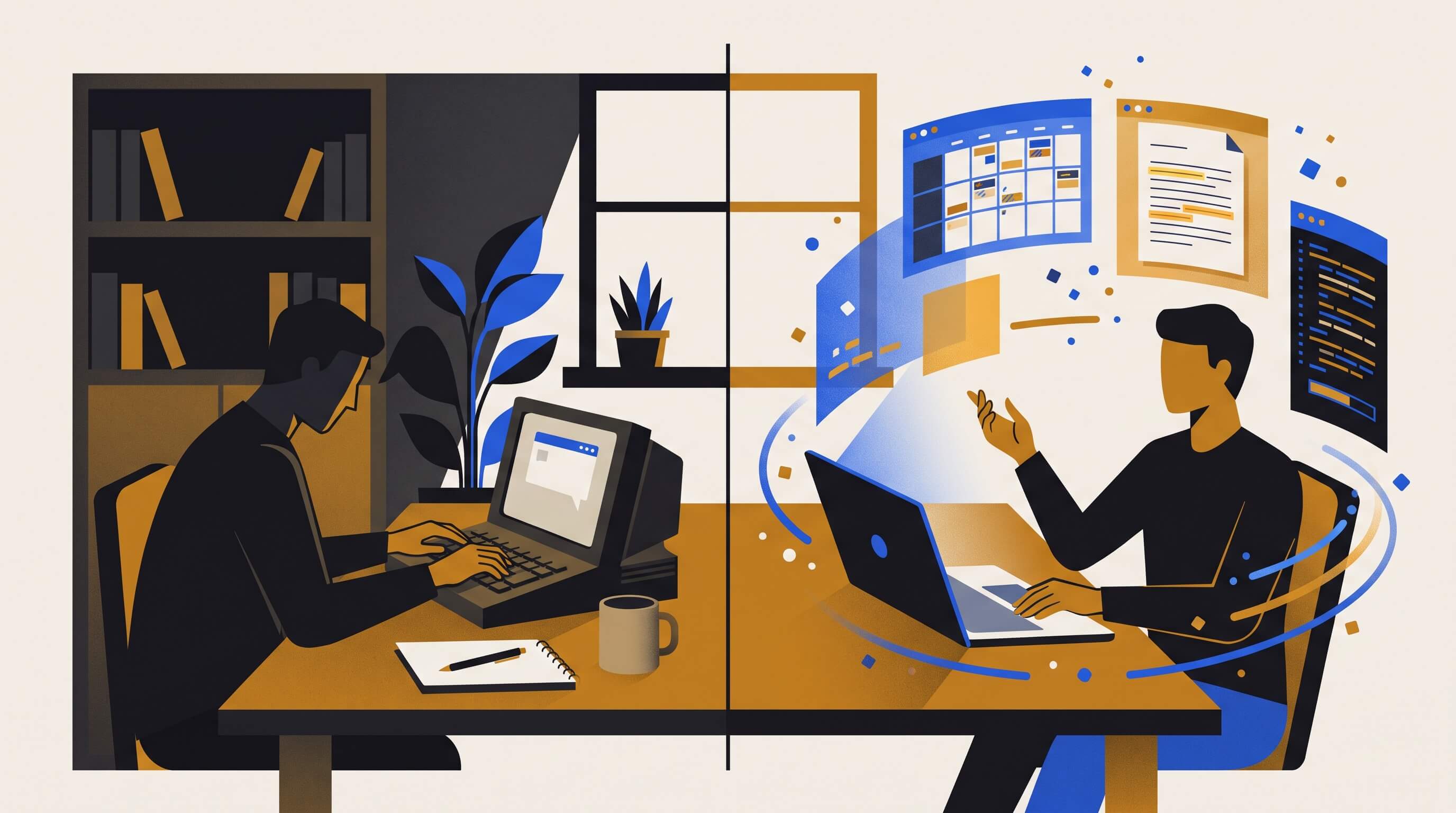 Image generated with AI
In 2024, I wrote a post about how AI (artificial intelligence) was changing our daily lives, from work to how we socialize. Two years is a long time in AI, so it feels like the right moment to check my own homework: what changed, what I still believe, and what I’d add. Here’s the 2024 post if you missed it.
What changed: from tool to teammate
The past two years brought better models and better ways to build them, and AI has worked its way deeper into our lives than ever. The most visible place is social media. Open almost any app and AI-generated content is waiting in your feed. With one simple prompt, you can make a realistic image, video, or song and share it with friends and family.
At work, the shift is even bigger. AI is either built into the apps we already use or introduced straight into the company workflow. Search on Google and Gemini summarizes the results for you. Open WhatsApp and Meta AI is right there. Big tech isn’t doing this for no reason: AI is the current bet on a better user experience.
Companies are pushing just as hard internally, rolling out tools like Claude or ChatGPT Business to help with documents, images, and even app development. Indonesia’s adoption is well above the global average. In a 2024 Microsoft and LinkedIn survey, 92% of Indonesian knowledge workers said they already use generative AI at work, compared with 75% globally.
The bigger change is that AI no longer just helps; it acts. AI agents can break down a multi-step task, make a call, and carry it out. Open-source agents like OpenClaw and Hermes Agent already work as personal assistants, running errands across your apps from a chat window. AI is no longer just a tool. It can now lead a process. In my view, that means AI can already take over a lot of work people used to do by hand.
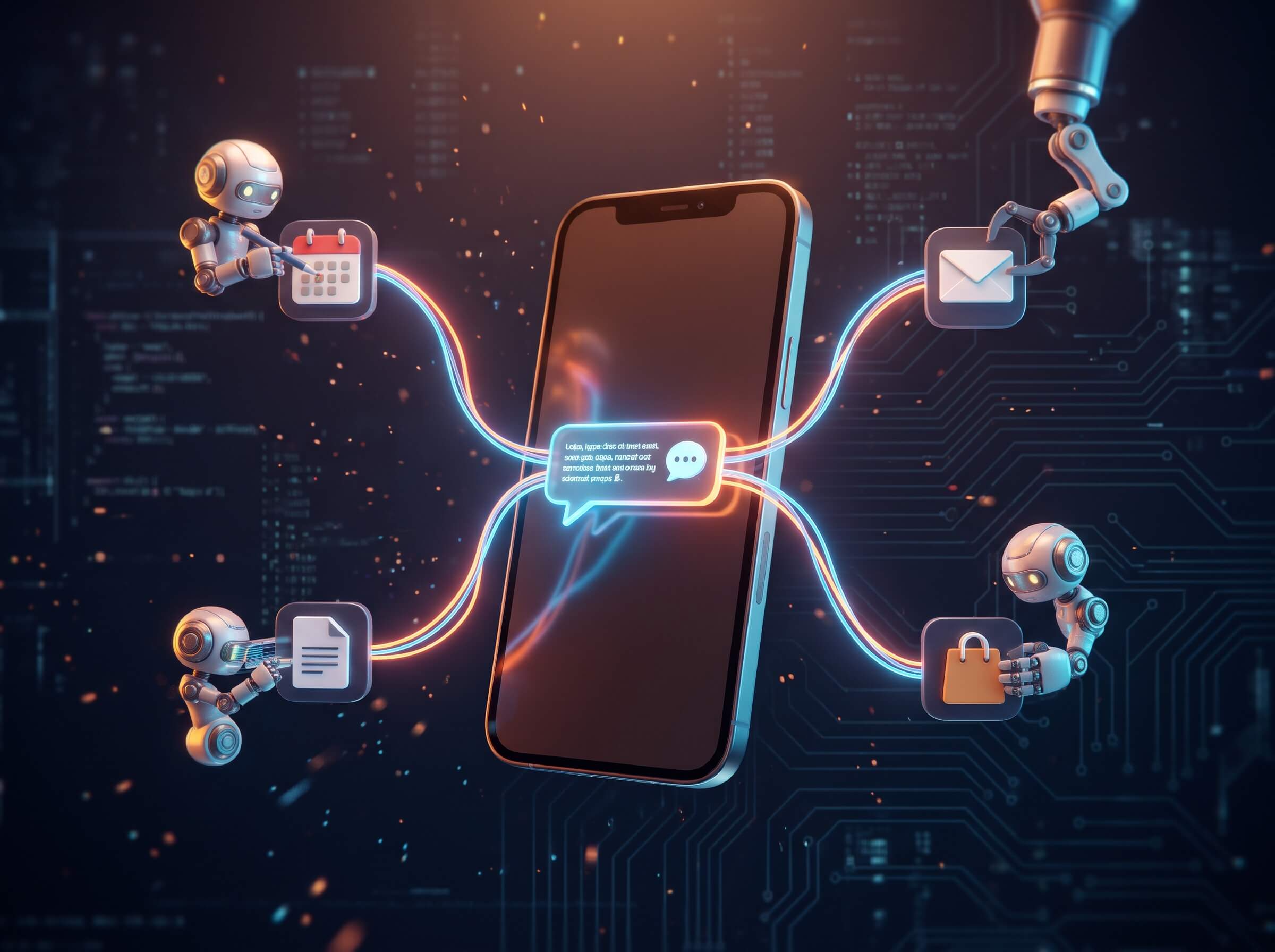 Image generated with AI
As for me, I use AI every day: to create documents, to build apps, and to get up to speed quickly on things I need to research. Honestly, I use it more and more in my daily and professional life, including writing this post.
So did all this change what I wrote in 2024? Some of it. I keep a fairly conservative view of how people and technology interact, so most of my argument stayed put.
What hasn’t changed: humans still make the call
Even with everything above, I still believe AI won’t simply push people out of their jobs, and it certainly won’t make humans useless. Here’s why.
AI is built from human work
As the name says, it’s artificial intelligence. It runs on the raw material of human intelligence: the data, algorithms, and frameworks people created. AI can mimic, and in some tasks surpass, human abilities, but everything it knows traces back to knowledge and reasoning humans built over time. It cannot run on artificial intelligence alone.
Someone still has to make the call
The better AI gets at learning, understanding, and building, the more our own judgment matters. We’ve already seen what happens without it. In the US, families have filed lawsuits alleging that AI chatbots contributed to their teenage sons’ suicides after the boys confided in a chatbot instead of the people around them. And in January 2026, Indonesia became the first country to temporarily block Grok after it was used to create sexualized deepfakes of real people.
Even the Vatican weighed in. In May 2026, Pope Leo XIV published Magnifica Humanitas, his first encyclical, on AI. Its core point is one I share: human beings come before the technology, and responsibility has to stay with people, from those who build these systems to those who use them.
So we need to use our own sense. Decide why and how you use the AI in your hands, and judge what it gives back instead of letting it decide for you. As the one receiving the output, you’re also the one who has to tell what’s true and what isn’t. We make the decisions and we live with the consequences, not the AI tool.
 Image generated with AI
Slop is what happens when nobody checks
If you wonder why we still need a person to tweak and verify AI results, there’s now a word for it: slop. Merriam-Webster picked “slop” as its 2025 Word of the Year and defines it as low-quality digital content, usually mass-produced with AI. Think fake news that looks real, absurd videos, and junk e-books churned out for clicks or cash.
AI can produce far more, far faster, than any person. Without someone checking the output, all that speed mostly buys you more slop.
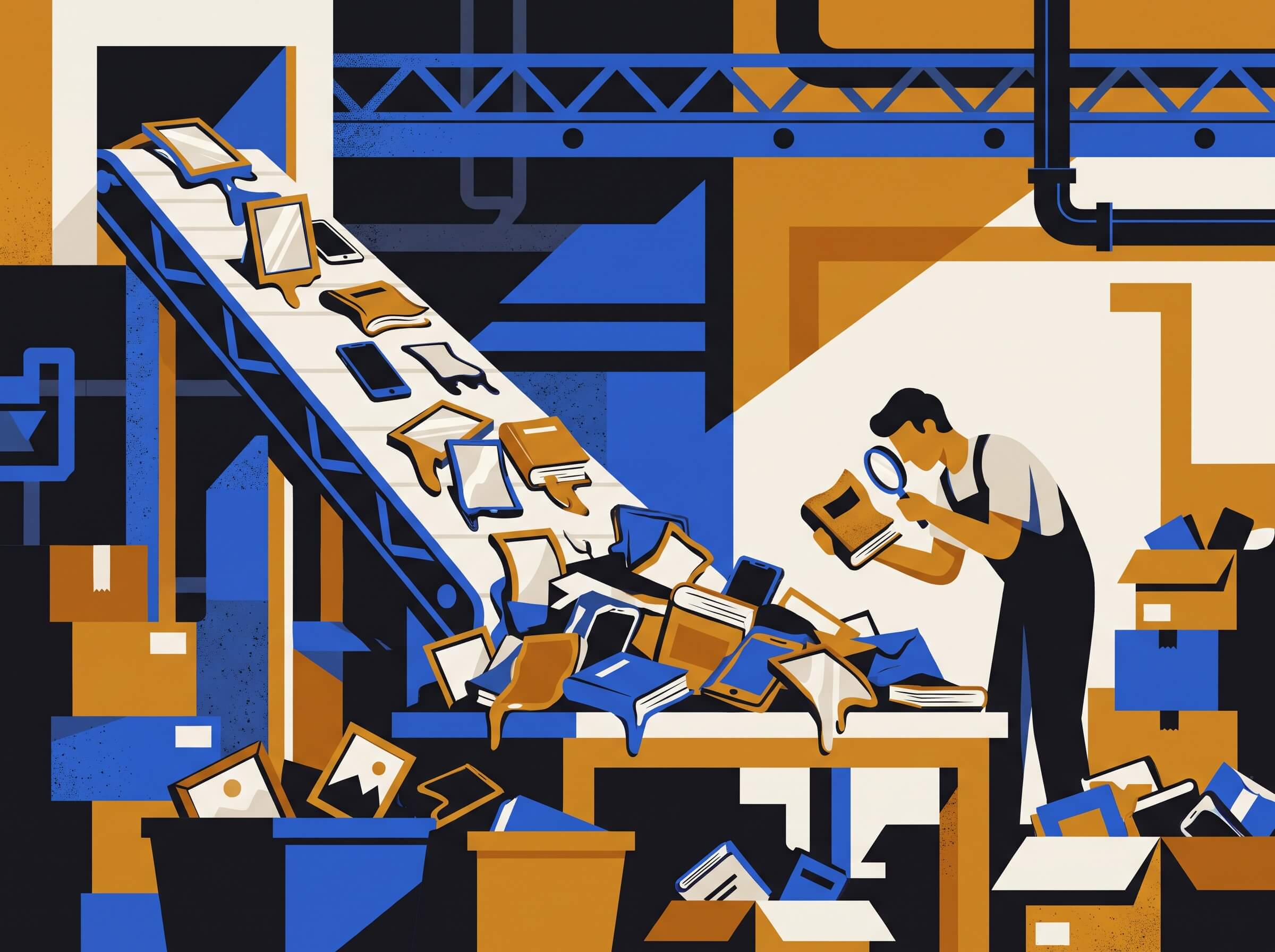 Image generated with AI
The cracks are showing
As of November 2026, the AI world isn’t all smooth sailing.
- Model collapse. A 2024 study in Nature found that AI models trained on content made by other AI models degrade over generations, slowly forgetting the rarer parts of real data. As slop floods the internet, the next models risk learning from it.
- Power and data centers. Unlike human intelligence, AI needs enormous amounts of resources to produce anything. I run on rice and coffee; data centers run on electricity and water, and lots of both. The IEA (International Energy Agency) expects data-center electricity use to roughly double by 2030.
- Shaky markets. Investors are nervous too. On November 5, 2026, an AI-led selloff dragged the S&P 500 down 4.4%, partly on worries about the cost of all those data centers.
Which leaves a question both sides are still arguing about: as demand for AI keeps growing, does it make sense to keep building data centers that compete with people for power, water, and land?
 Image generated with AI
So what can we do?
As individuals
AI is woven into daily life now, and I don’t think it’s going away, even with the energy debate and the market jitters. So the right move is to keep learning how to use it. Not just to finish tasks faster, but to use it in ways that are good for us and for the people around us.
Common sense matters more than ever, too. With AI producing endless documents, images, and posts, it’s on us to use it responsibly, and to question what reaches us through social media and group chats so we don’t fall for misinformation and fake news.
As a country
Governments are catching up. The EU (European Union) AI Act has been in force since 2024, although in May 2026 the EU agreed to push its high-risk rules back to late 2027 and 2028. South Korea’s AI Basic Act took effect in January 2026.
Indonesia is still on its way. Two Perpres (Peraturan Presiden, presidential regulations), one on a national AI roadmap and one on AI ethics, were waiting for the President’s signature as of September 2026. On the data side, we already have UU PDP (Undang-Undang Pelindungan Data Pribadi, the Personal Data Protection Law), but the agency meant to enforce it hasn’t been formed yet. With demand for AI growing this fast, Indonesia needs those rules in place, and soon.
Final thought
Two years on, AI is more powerful than ever. It doesn’t just assist our work anymore; it can lead the process and manage whole systems for us. But what AI has is decision-making. What people have is context and an understanding of the situation. That’s why people should stay in the loop and decide what AI does, not the other way around.
As I said in 2024, we can’t stem the tide of progress, so we have to keep evolving with it. Just make sure you’re the one steering.
The best worker isn’t AI. It’s a human enhanced by it.
